

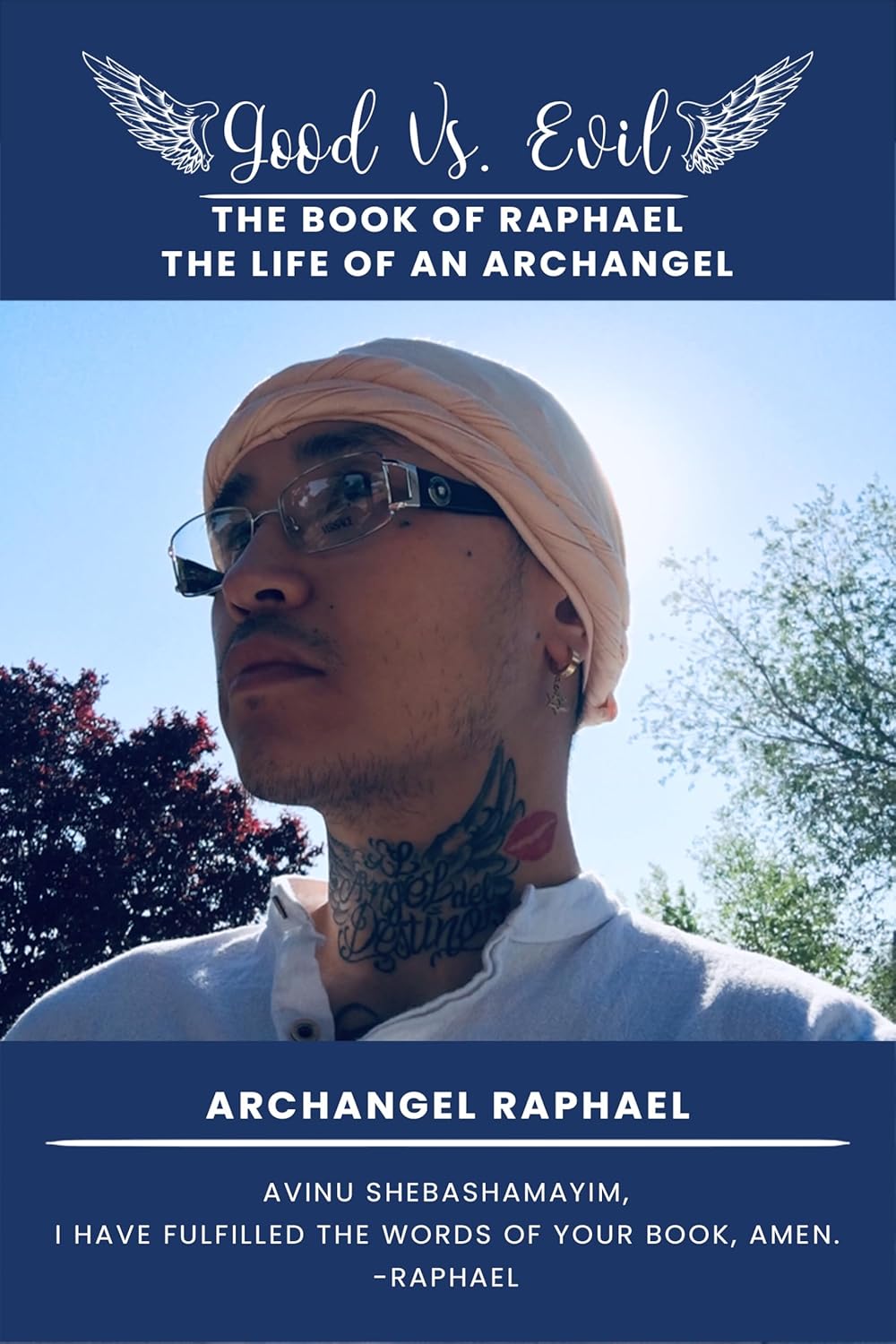
New York is a city built on stories of survival, reinvention, and resilience. It’s a place where millions wake up every day to fight visible and invisible battles: financial pressure, generational trauma, loneliness in crowded spaces, and the constant demand to become more than circumstance. “Good vs. Evil: The Book of Raphael” fits perfectly into this landscape. It is a memoir that mirrors the pulse of the city: fast, intense, unfiltered, and deeply human.
Raphael’s story begins in the margins of the American dream, inside a Southeast Asian immigrant household stretched thin by financial strain, cultural conflict, and emotional instability. His early childhood is painted with vivid detail, parents arguing late into the night, the feeling of displacement in a country that promises opportunity but delivers hardship, and the quiet suffering of a child forced to grow up too quickly.
But nothing in Raphael’s life scars him more deeply than the moment he is told he “should never have been born.” This single sentence becomes the emotional earthquake that fractures his sense of self. Many New Yorkers, children of immigrants, survivors of broken homes, individuals carrying emotional wounds will immediately recognize the weight of such words. Trauma does not disappear; it becomes the ghost that follows you into adulthood.
The memoir transitions into adolescence, where Raphael’s world becomes even darker. Drawn toward violence and street life, he begins navigating the unwritten rules of survival that shape so many urban youths. The book does not romanticize this stage; instead, it presents it with raw realism. Raphael’s behavior is not portrayed as rebellion but as a reaction to pain, neglect, and the human need for belonging.
The most gripping chapter and one that feels ripped from a New York Post front page involves Raphael’s near‑fatal prison stabbing. The scene is described with chilling precision: the flash of a handmade blade, the shock of impact, the taste of blood, the instinctive fight to stay conscious as life drains away. He is stabbed repeatedly his back torn open, his arm sliced, his chest nearly punctured. Yet, he survives. This moment symbolizes not only physical endurance but the spiritual resilience at the core of his identity.
It’s here that the memoir takes a dramatic turn from gritty street realism into cosmic revelation. Raphael unveils the truth: he is not merely a man shaped by trauma. He is an archangel engaged in a celestial war that predates human history. The battles he remembers in heaven are depicted with cinematic scale wings clashing like steel, fallen angels turning violent, the collapse of once‑holy beings consumed by pride and corruption. These supernatural scenes parallel the book’s earthly struggles, showing that the fight between good and evil is both internal and universal.
For New York readers, this duality resonates deeply. Every day, the city forces its residents to confront their own darkness and rise above it. Raphael’s story is a metaphor for the city itself: bruised but unbroken, chaotic but full of purpose, dangerous yet divine.
The memoir also explores themes of redemption another concept New Yorkers understand well. Raphael’s transformation from a wounded child, to a hardened young man, to a being of spiritual power reflects the potential for reinvention that pulses through the city’s veins. New York is a place where you can lose everything by morning and rebuild by night. Raphael embodies that same relentless will to rise.
“Good vs. Evil: The Book of Raphael” is not just a story about one man; it is a mirror held up to every reader fighting their own battles. It challenges us to confront our wounds, to recognize the unseen forces shaping our paths, and to embrace the possibility that our lives may hold greater purpose than we realize.
For readers who crave truth, grit, and transcendence, Raphael’s journey is unforgettable.
Experience the full story on Amazon KDP: https://www.amazon.com/dp/B0F1W5H6K3
